Ball of Foot Pain

If you are feeling soreness, burning or aching under the front of your foot, especially when walking or standing, you may be experiencing ball of foot pain, often called metatarsalgia.

It is one of the most common foot complaints we see, and it usually responds well to the right support. FootAid products are designed by a New Zealand physiotherapist and podiatrist to spread pressure away from the sore area and make walking comfortable again.

Does This Sound Like You?

Ball of foot pain tends to follow a recognisable pattern. You may notice aching or burning under the ball of the foot, pain that builds the longer you walk or stand, or a feeling like there is a pebble or a folded sock underfoot. There is often tenderness under one or more of the bones just behind your toes, more discomfort in thin-soled or high-heeled shoes, and hard skin building up under the front of the foot.

If two or more of these ring true, pressure is very likely overloading your forefoot, and cushioning and support are the right place to start.

Shop Ball of Foot Pain Relief →

What Causes Ball of Foot Pain?

Ball of foot pain refers to discomfort under the metatarsal heads, the weight-bearing area just behind your toes. Rather than one single condition, it is usually a pressure overload problem, where those bones carry more load than they should over time.

Several things commonly contribute. Foot mechanics that push load onto the forefoot, a stiff or less mobile big toe, tight calf muscles or limited ankle movement, and thinning of the natural fat padding under the forefoot all play a part. So do high-heeled or thin, unsupportive shoes, a sudden increase in walking, running or standing, and toe changes such as bunions or hammertoes.

More than one factor is usually involved, which is why combining cushioning with proper support tends to work better than either on its own.

The One Thing Most People Get Wrong

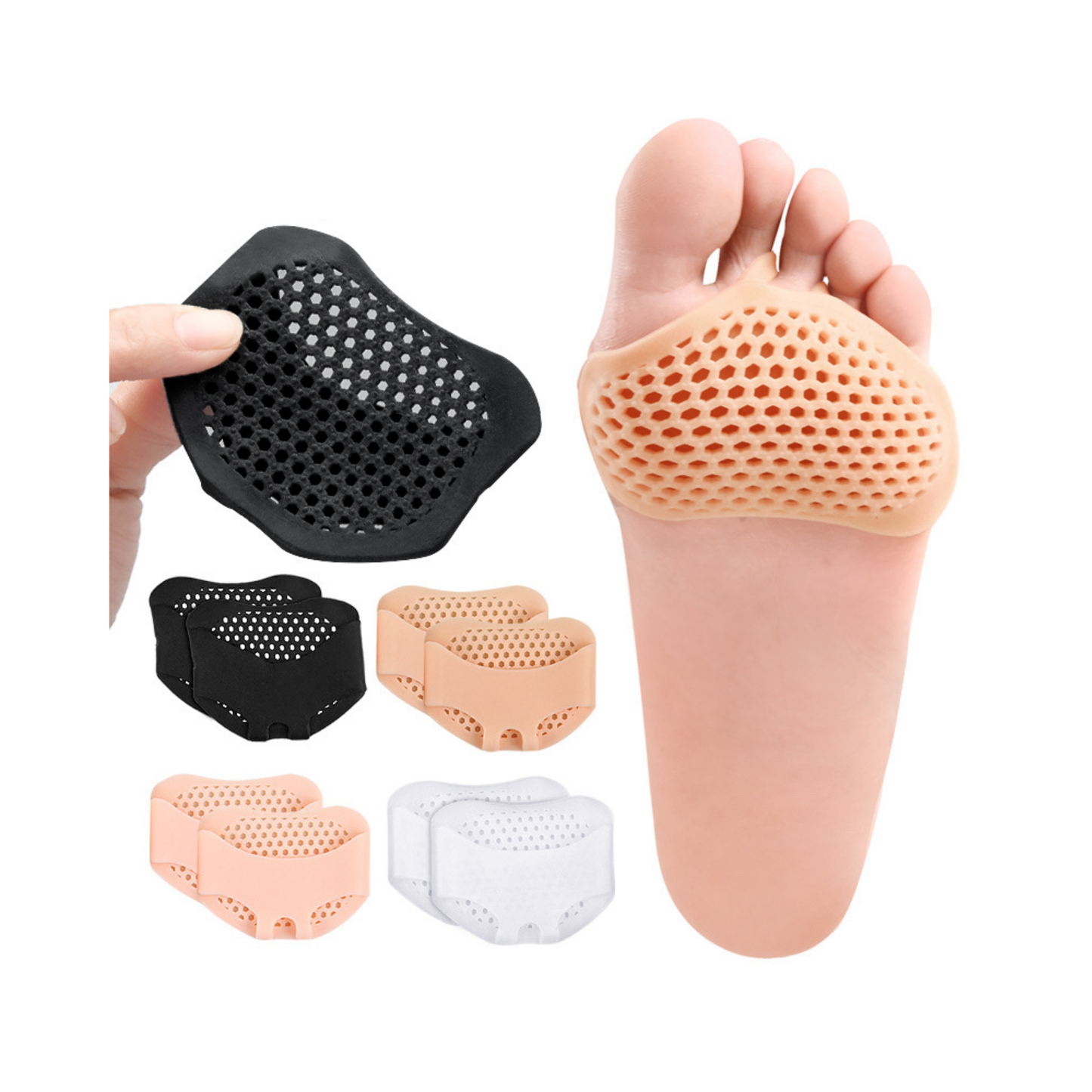
Metatarsal pads work well when they are placed correctly, and they make things worse when they are not.

The pad should sit behind the ball of your foot, not underneath it. Feel for the bony knuckles at the base of your toes and place the pad roughly a centimetre behind them, toward your arch. Placed directly on the sore spot, it presses into the very area you were trying to protect.

Allow yourself a few days to adjust, wear pads in both shoes even when only one foot hurts, and move the pad a few millimetres if something feels sharp rather than simply unfamiliar.

How Long Does It Take to Improve?

With consistent offloading and support, many people notice a real difference within four to eight weeks.

How long it takes for you depends on how long you have had symptoms, how active you are, the shoes you wear most, your underlying foot mechanics, and how consistently you manage the pressure.

Starting early makes the biggest difference. Pain that has been building for months takes longer to settle than pain caught in the first few weeks.

Why FootAid?

FootAid was created by Cameron Collins, a New Zealand physiotherapist and podiatrist, after seeing too many patients struggle with over-the-counter products that did not do the job.

Every product is clinically informed and designed for real-world use, drawing on years of treating feet in practice here in New Zealand.

Our goal is simple: to help you move more comfortably, sooner.

Learn More About FootAid

Common Questions

How do I know which size to choose?

Sizing guidance is on each product page. If you are between sizes or unsure, get in touch and we will point you in the right direction.

Can I keep exercising?

Usually, yes. Keep moving, but ease back on whatever clearly aggravates it and build up gradually as the pain settles.

Will insoles fix forefoot pain on their own?

Insoles address how load travels through your foot, which is often the underlying cause. Many people get the best result from an insole combined with forefoot cushioning and sensible footwear.

Should I wear them in both shoes?

Yes. Wearing support in one shoe only leaves you slightly uneven, which tends to create new aches through the knee, hip or lower back.

Can I wear metatarsal pads in any shoe?

Most everyday shoes and trainers have room for them. Very tight or narrow shoes may feel snug, so a slimmer cushion tends to suit those better.

Is ball of foot pain the same as Morton's neuroma?


Not quite. General ball of foot pain is usually a pressure problem across the forefoot. Morton's neuroma is an irritated nerve, typically between the third and fourth toes, and it often comes with tingling or numbness. Metatarsal pads can help both, but if you have numbness or tingling, it is worth having it assessed.

When to Get It Checked

Most ball of foot pain settles well with the right support, but some situations call for assessment rather than a cushion.

Please have it looked at if you have numbness, tingling or burning in your toes, if the pain came on suddenly and is sharp with every step, if there is swelling on the top of the foot, or if you cannot put weight through the front of your foot. The same applies if you have diabetes or reduced circulation, or if nothing has improved after several weeks of sensible footwear and support.

Ball of Foot Pain Treatment in New Zealand

If you are searching for ball of foot pain treatment, metatarsalgia support or forefoot pressure relief in New Zealand, FootAid offers clinically guided products designed to improve comfort and support better foot function.

Explore our range of metatarsal support orthotics, forefoot cushions and pressure-relieving insoles, all developed by a New Zealand physiotherapist and podiatrist.