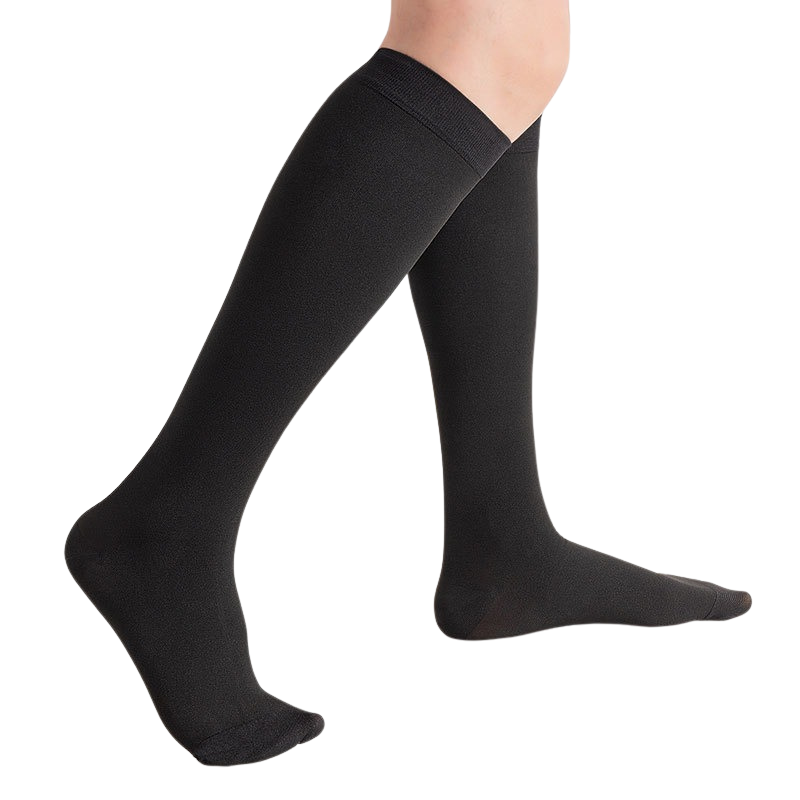
Collection: Compression Support
By the end of a long day, legs that have been standing, sitting or travelling tend to let you know about it. Ankles puff up over the edge of your socks, calves feel heavy, and your feet seem to have quietly outgrown the shoes you put on that morning.
Our compression support range works with your circulation rather than against it. Graduated compression is firmest at the ankle and eases as it travels up the leg, which encourages fluid to move upward instead of pooling where gravity wants it to settle.
Have a browse below, or read our guide further down the page if you are not sure which option suits you.
-
FootAid Ankle Sleeve
Regular price $19.00 NZDRegular priceSale price $19.00 NZD -
FootAid Compression Sock
Regular price $30.00 NZDRegular priceSale price $30.00 NZD -
FootAid No Show Socks
Regular price $15.00 NZDRegular priceSale price $15.00 NZD
How Graduated Compression Works
The word graduated is doing the important work here, and it is what separates a proper compression sock from an ordinary tight one.
Blood travels down to your feet easily enough, since gravity helps. Getting it back up the leg is harder work, and it relies largely on your calf muscles squeezing the veins as you move. When you stand still for hours, sit at a desk all day, or spend a long flight barely shifting position, that pump is barely working. Fluid settles in the lower leg and ankle, and the result is the swelling and heaviness you notice by evening.
Graduated compression is knitted to be tightest at the ankle and progressively looser toward the knee. That pressure gradient gives fluid an easier path upward and a harder one downward, so it keeps moving rather than pooling.
A sock that is simply tight all over does not do this. In fact even pressure, or a band that grips at the top, can restrict flow at the wrong point and make swelling worse below it. If you have ever taken off ordinary socks to find a deep ring around your calf and puffy ankles underneath, you have seen exactly that.
This is also why fit matters more than with most products. Compression is a measured thing, and a sock that is too big does nothing while one that is too small becomes uncomfortable and counterproductive.
Choosing the Right Compression Support
-
Mild Compression
Light everyday support, roughly 8 to 15 mmHg. Suited to tired, aching legs, desk work and general prevention. Comfortable enough to wear all day and the sensible place to start if you have not used compression before.
-
Moderate Compression
Around 15 to 20 mmHg, the most widely used strength. Suited to noticeable end-of-day swelling, long-haul flights, long days standing at work, and pregnancy. Firm enough to make a clear difference without needing fitting.
Wearing Compression Socks Properly
Compression is straightforward once you know a few things, and these points make the difference between wearing them daily and leaving them in a drawer.
Put them on first thing. Swelling accumulates through the day, so the best time to get them on is in the morning before your legs have filled. Pulling compression over an already swollen ankle in the evening is harder work and less effective.
Measure rather than guess. Sizing is based on ankle and calf measurements, not shoe size, and it is worth taking a tape measure to your legs first thing in the morning. This is the single most common reason people find compression uncomfortable.
Learn the turning technique. Turn the sock inside out down to the heel, slide your foot in, then roll it up the leg rather than yanking it. Rubber washing-up gloves give a surprisingly good grip if your hands find it difficult.
Smooth out every wrinkle. A fold or bunched section concentrates pressure in one line and can cause a mark or restrict flow. The sock should sit flat against the skin the whole way up.
Do not roll or fold the top down. Folding doubles the compression at that point and creates a tight band, which is exactly what you were trying to avoid. If it is too long, you have the wrong size.
Take them off at night unless you have been advised otherwise. When you are lying flat, gravity is no longer working against you and compression is not usually needed.
Replace them regularly. Elastic fibres lose their stretch with washing and wear. Most pairs are past their useful compression after around three to six months of regular use, even if they still look fine.
FootAid
FootAid Compression Sock
Share

Related Ranges You Might Find Useful
-
Toe Alignment
Toes that sit too close together cause more trouble than most people...
-
Bunion Relief
If you have a bunion, you already know the feeling. That first...
-
Best Sellers
Explore our best selling FootAid products for foot support and comfort. Clinically...
-
Forefoot Relief
Pain under the ball of the foot has a way of building...