Collection: Blister Protection

A blister can ruin a tramp, a race or simply a day in new shoes, and it almost always announces itself before it appears. There is a warm, tingling patch that you notice and choose to ignore, and twenty minutes later the damage is done.

Our blister protection range covers both halves of the problem. There are products for stopping the rubbing before a blister forms, and dressings that protect and cushion one that has already appeared so you can keep going.

Have a browse below, or read our guide further down the page if you are not sure which option suits you.

FootAid Hydrocolloid Blister Plasters - FootAid

Catching a Blister Before It Forms

The most useful thing to understand about blisters is that they give you warning, and almost everyone ignores it.

Blisters need three things: friction, moisture and time. Something rubs repeatedly against the same patch of skin, sweat softens that skin and increases the grip, and the layers underneath begin to separate. Fluid fills the gap, and you have a blister.

Before that happens, there is a stage most walkers and runners know well. The area feels warm, then tingly, then mildly sore. This is the hot spot, and it is the moment when the whole thing is still preventable. Stopping to put tape or a pad over that patch takes two minutes and saves the next three days.

The reason people push on instead is that a hot spot does not feel serious enough to justify sitting down and taking a boot off, particularly in company or mid-race. That calculation is almost always wrong. A blister that forms at hour two of a tramp will affect every step of the remaining days.

If you take one thing from this page, make it that. Deal with a hot spot the moment you notice it, not when it becomes a blister.

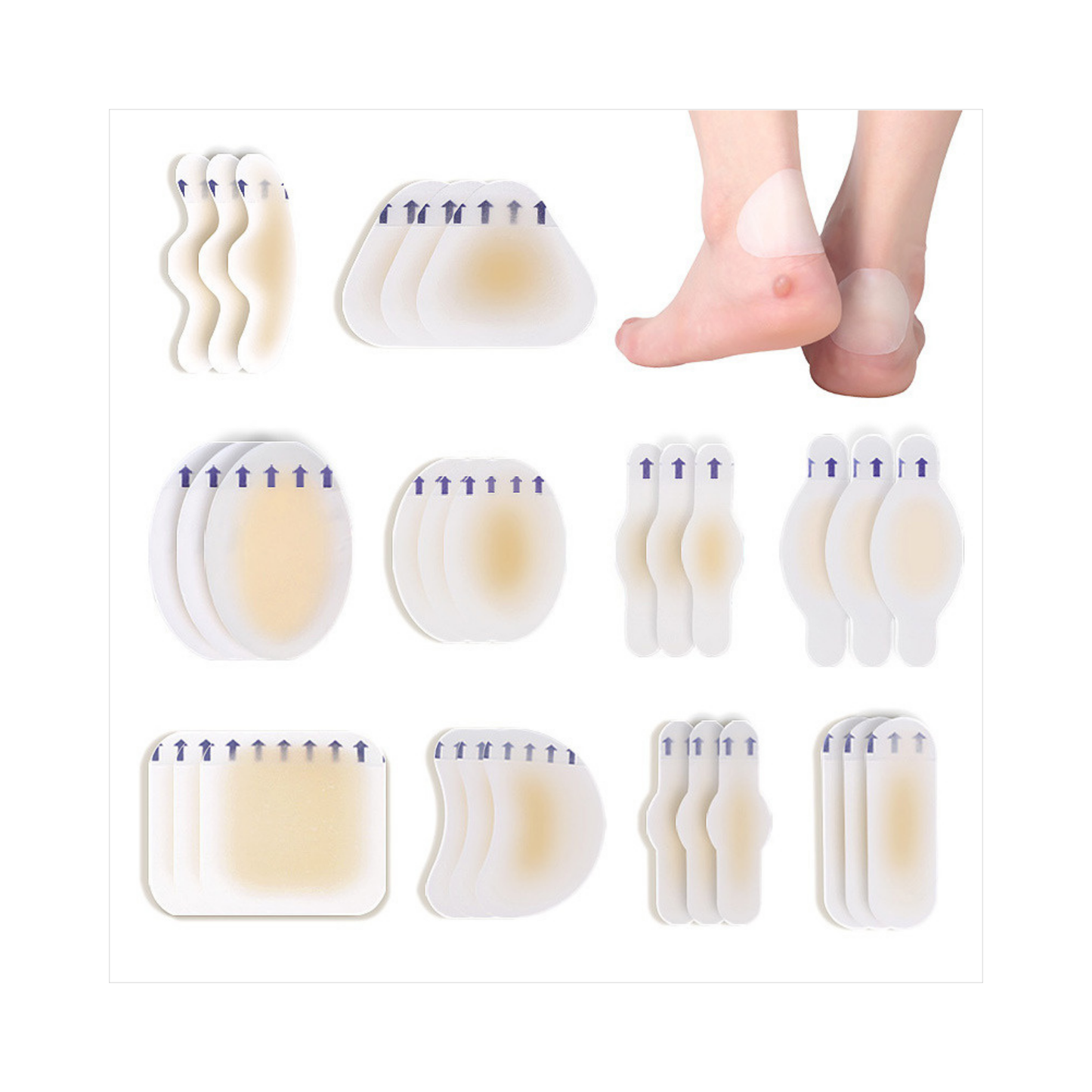
  • Hydrocolloid Blister Plasters

    Gel-based dressings that cushion an existing blister and create a moist environment underneath, which is what skin heals best in. They stay put for days and take the pain out of walking almost immediately.

  • Gel Blister Pads and Cushions

    Thicker padding for blisters in high-pressure spots such as the heel or the ball of the foot. Best when you need to keep walking on an area that is taking real load with every step.

Looking After a Blister Safely

Once a blister has formed, a few sensible steps will get you through it without complications.

Leave it intact if you can. The roof of the blister is a sterile natural dressing, and skin underneath heals faster and more safely beneath it. Cover it, take the pressure off, and let it settle on its own.

If it is large, painful and in a spot you must keep walking on, it may be better drained than left to burst on its own. Clean the area, use a sterilised needle at the edge rather than the centre, let the fluid out, and leave the roof in place. Do not peel the skin away.

Do not remove loose skin from a burst blister. It still protects what is underneath while new skin forms. Trim it only if it is catching and tearing further.

Use a hydrocolloid dressing and leave it alone. These work best undisturbed, often for several days. Peeling one off to check progress removes the healing environment you just created. Let it lift off naturally at the edges.

Take the pressure off the area. A dressing helps, but if the same shoe keeps rubbing the same spot, the blister will not settle. Change footwear if you can, or add a pad around rather than on the blister.

Keep feet dry. Damp skin blisters far more readily. Change socks on long days, and consider a moisture-wicking pair rather than cotton, which holds sweat against the skin.

Work out why it happened. A blister that appears in the same place repeatedly is telling you something about the shoe, the sock or the way your foot moves inside it.