Collection: Toe Alignment

Toes that sit too close together cause more trouble than most people expect. They rub against each other, they overlap, and the skin between them stays damp and tender. Over time that pressure turns into corns, hard skin and a persistent soreness that shows up every time you put your shoes on.

Our toe alignment range gently creates space where your toes need it. These are simple, everyday products that sit between or around your toes to reduce the crowding, ease the rubbing, and make walking feel more comfortable again.

Have a browse below, or read our guide further down the page if you are not sure which option suits you.

Toe Alignment

What Toe Alignment Products Do

It helps to be clear about what these products are for, because that makes choosing one much easier.

Toes crowd together for all sorts of reasons. Years of narrow footwear, the natural shape of your foot, a bunion pushing the big toe inward, or changes that come with age and arthritis. Whatever the cause, the result tends to be the same: toes pressing against one another, skin rubbing on skin, and pressure concentrated in places that were never meant to carry it.

Separators, spacers and aligners work by restoring a little of that lost space. A soft gel spacer between two toes stops them rubbing. A five-toe separator spreads the whole forefoot and gives every toe room to sit naturally. A fabric aligner holds a toe in a straighter position while you rest.

What they will not do is permanently change the structure of your foot. If a toe has become fixed in position over many years, wearing a spacer will not reverse that. What it will do is make the day far more comfortable, prevent the rubbing that leads to corns and hard skin, and give your feet relief at the end of a long day. For most people, that is exactly what they were looking for.

  • Dual-Toe Correctors

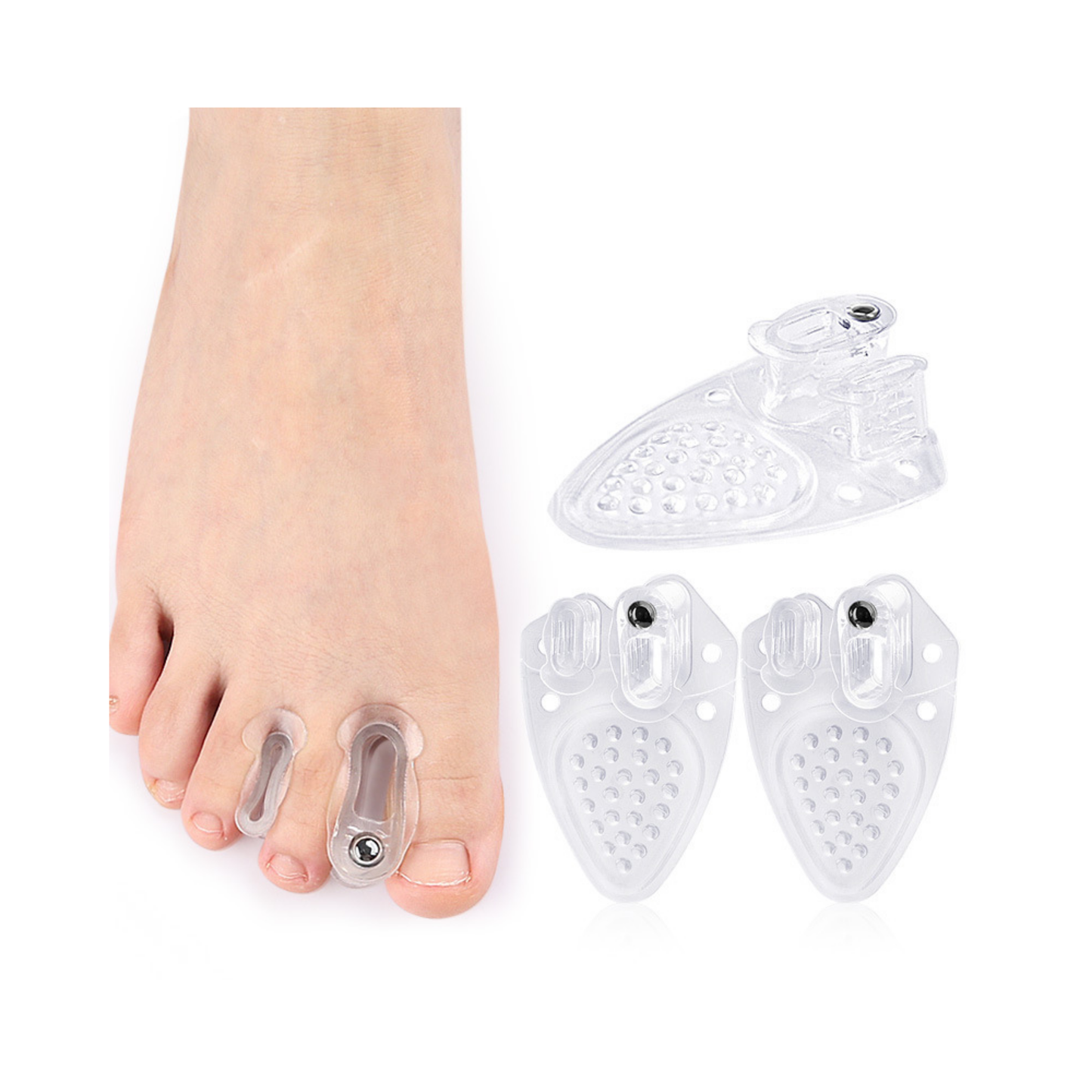
    Designed to address two toes together rather than one at a time. Useful when the crowding affects more than a single gap but a full five-toe separator is more than you need.

  • Two-Toe Gel Separators

    The place most people start. A small gel spacer that sits between two toes to stop them rubbing. Slim enough to wear inside everyday shoes, and ideal if the discomfort is coming from one particular gap rather than the whole foot.

  • Five-Toe Separators

    These spread all five toes at once and give the whole forefoot room to relax. Most people find them best for resting, after exercise, or in the evening, since they are bulkier than a single spacer and need roomier footwear.

  • Slim C-Shaped Spacers

    A lower profile design that hooks gently around the toe rather than filling the whole gap. Worth considering if your shoes are already snug and a standard spacer feels like too much.

  • Overlapping Toe Correctors

    Structured supports for toes that cross over one another. They hold the toe in a better position and protect the skin where the overlap causes rubbing, which is usually the part that becomes sore first.

  • Fabric Toe Aligners and Straighteners

    Softer, fabric-based bands that wrap the foot and hold the toes in a straighter line. These suit resting and recovery rather than all-day wear inside shoes.

Getting the Best From Your Toe Separators

A few practical points will make a real difference to how well these work for you.

Start gradually. If your toes have been crowded together for years, spreading them apart suddenly can feel strange or even uncomfortable. Begin with twenty or thirty minutes at a time and build up as your feet adjust. There is no benefit in pushing through discomfort on the first day.

Match the product to the moment. Slim spacers are made for wearing inside shoes during the day. Five-toe separators and fabric aligners are better suited to sitting at home in the evening or resting after exercise. Many people keep one of each and use them at different points in the day.

Watch your footwear. Adding anything between your toes takes up room, so a shoe that was already tight will become tighter. If you find a new pressure point appearing after you start using a spacer, the shoe is usually the problem rather than the spacer.

Keep them clean and dry. Gel products last considerably longer with a rinse in warm soapy water and a proper dry before they go back on. The skin between your toes stays healthier for it too.